



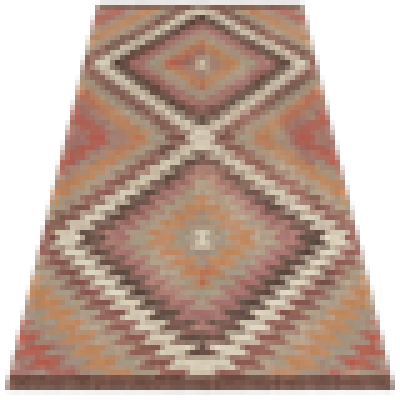


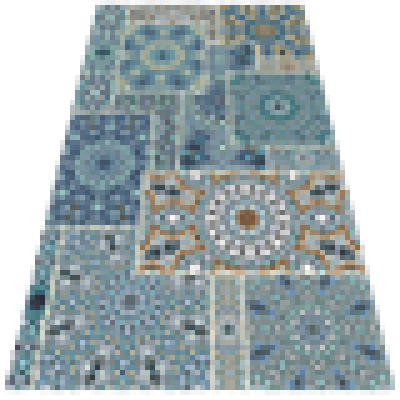
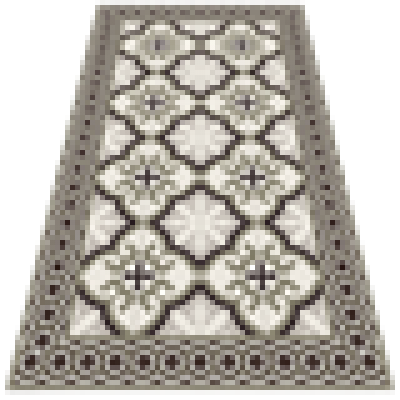
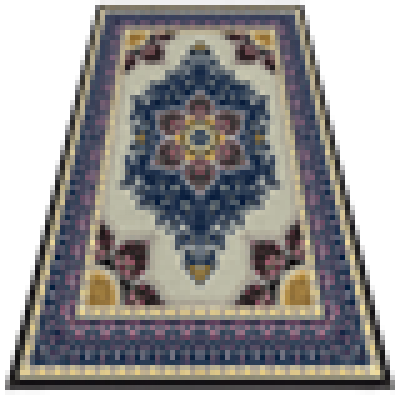




















































The hallway is responsible for the first impression, although it is often the most difficult room to arrange. In many apartments we find a narrow hallway, a long corridor, a small hallway without a window, or an entrance with a small floor area where there is a lack of natural light. In such a space, every element matters: the color of the walls, the type of floor, lighting, mirrors, furniture and even the skirting boards.
One of the simplest and at the same time most effective ways to visually enlarge a hallway is a properly selected runner. It can serve a decorative function, warm up the interior, mute footsteps and protect the floors, but also significantly influence the perception of the space. A well-chosen pattern, light color palette and proper size make the space seem more orderly, light and visually larger.
If you are wondering how to arrange a narrow hallway, how to visually enlarge a small hallway and what runner to choose for a dark corridor, below you will find practical tips that will help completely transform the space.
Light colors of the runner, a simple way to brighten up the hallway
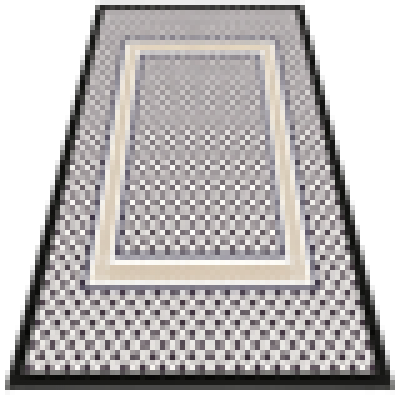
In dark and narrow interiors, light colors work best. This is a rule well known in interior design, but in the case of a hallway it takes on special significance. Light colors reflect light, making the interior appear lighter, fresher and more spacious. Beige, cream, light gray, ecru, sandy shades, washed-out blue or pastel tones are colors that can subtly open up even small rooms.
A light-colored runner does not have to be boring. An interesting solution is models with a delicate texture, melange weave or subtle tone-on-tone pattern. Such a runner adds coziness but does not overwhelm the small space. In the arrangement of a narrow hallway, it is worth avoiding very dark colors, especially if the corridor does not have a window. Deep black, graphite, dark brown or burgundy may look elegant, but in a small apartment they often make the room seem even more cramped.
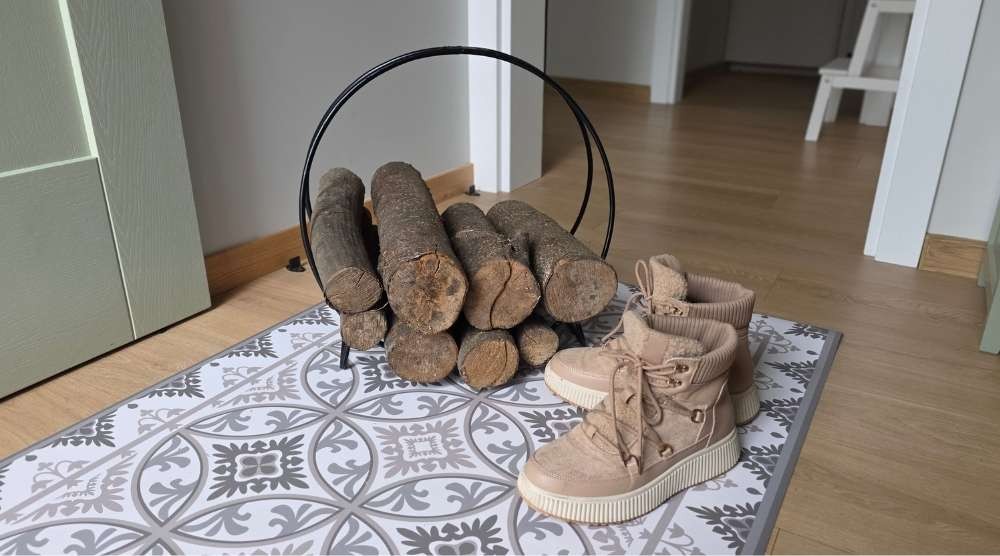
The light color scheme of the runner should harmonize with the rest of the decor. Light walls, a uniform floor and a runner in a similar shade create a calm base that supports visual enlargement. If you care about a harmonious effect, it is worth choosing a runner matched to the color of the walls or floor. Thanks to this, the boundaries between elements are not strongly marked and the space will seem more fluid.
It is also worth taking care of the material. A runner with a delicate, slightly satin finish or subtle sheen can additionally reflect light. Surfaces with a high gloss, such as cabinet fronts or decorative details, provide a similar effect, but in the case of textiles it is best to exercise moderation. The runner should brighten the hallway without dominating the entire arrangement.
Patterns that lengthen and widen a narrow corridor
The pattern of the runner can visually enlarge the space or, on the contrary, make a narrow corridor feel even more cramped. That is why the choice of design is just as important as color. If you want to visually enlarge a narrow hallway, pay attention to patterns that lead the eye along the room. Delicate lines, longitudinal stripes, subtle geometry and gentle color transitions can lengthen the corridor and give it lightness.
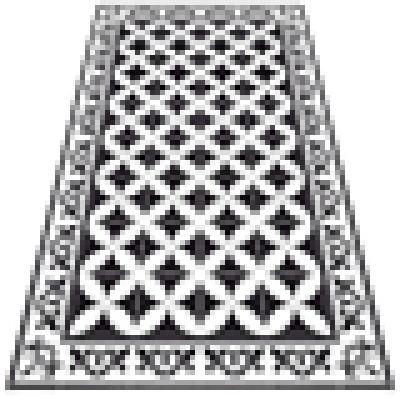
In a long hallway, runners with a motif running along the length look good. Such an arrangement organizes the interior and makes the design look more considered. However, if the corridor is very narrow, avoid too strong contrasts. Black and white stripes, large geometric patterns or heavy ornaments can introduce visual chaos. Their presence will attract the eye, but not always in a favorable way.
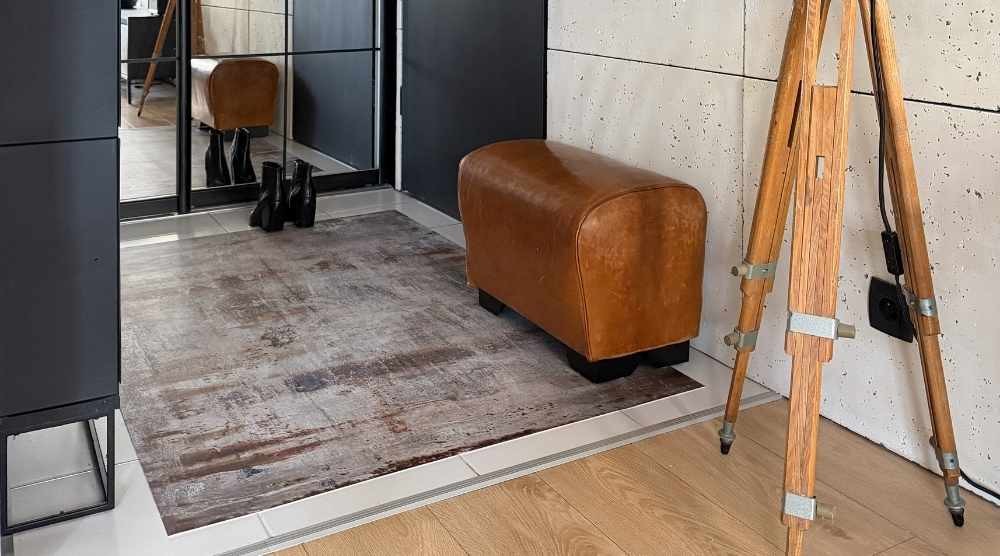
For small rooms, it is better to choose small, blurred or irregular patterns. They provide a soft effect and do not divide the space into sharp fragments. Runners inspired by natural structures work very well: light wood, linen, sand, stone, delicate marble or distressed fabrics. Such motifs suit both modern and classic interiors and at the same time help achieve a visual enlargement of the space.
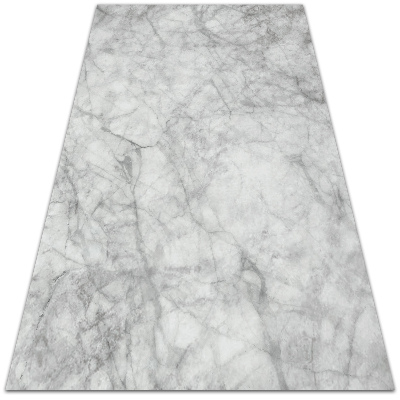
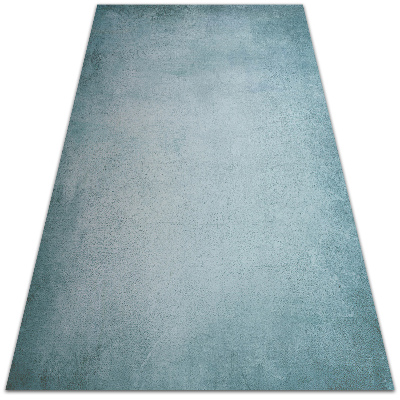
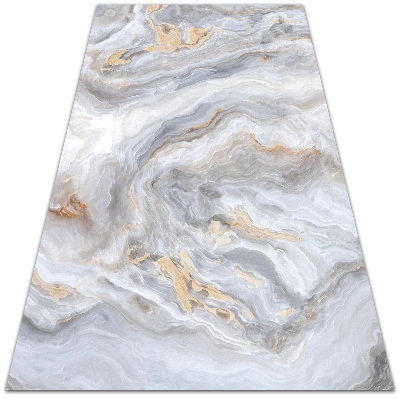
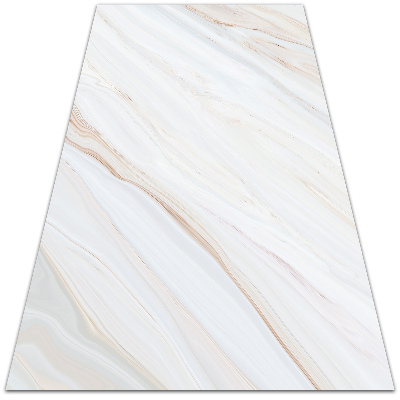
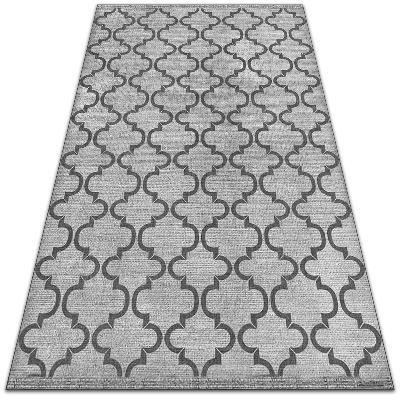
If the hallway is not only narrow but also disproportionately long, you can use a simple color trick. Paint the shorter wall in a slightly warmer or minimally darker shade than the longer walls. The shorter wall can also be accented with a decoration, mirror or picture. Combined with a light runner, this treatment will improve the proportions and affect the perception of the space.
The runner should support the arrangement rather than compete with it. If the wall is accompanied by decorations, photo galleries or a large mirror, choose a simpler model. If, on the other hand, the entire interior is minimalist, the runner can become a subtle accent and add elegance to the space.
The ideal runner size for the hallway – proportions matter
The size of the runner has a huge impact on the visual enlargement of the space. A model that is too wide can cover almost the entire floor and make a narrow hallway look heavy. A runner that is too small, on the other hand, may seem random and disturb the proportions of the corridor. You will achieve the best effect when a fragment of the floor remains visible on both sides of the runner. This is a simple way to make the hallway appear wider.
In arranging a narrow hallway, rhythm is important. The runner should lead the eye from the front door into the apartment but not visually block the passage. It is worth keeping a distance from the walls, wardrobe and furniture so that the space does not look overloaded. The lack of a threshold between the hallway and the next room additionally strengthens the impression of fluidity. A uniform floor extending further into the living room or kitchen is one of the proven ways to visually enlarge the space.
If you have a long corridor, choose a runner that emphasizes its line but does not end in a random place. It is good if it starts not far from the entrance and leads towards the further part of the apartment. In a small hallway, a shorter runner or a small rug may be a better choice, marking the entrance area but not overwhelming the interior.
Proportions also apply to the pattern. In a small space, a large ornament may look too massive, and a very small design may be tiring for the eyes. It is best to opt for a calm compromise: a subtle rhythm, a light background and a delicate accent that gives the arrangement character.
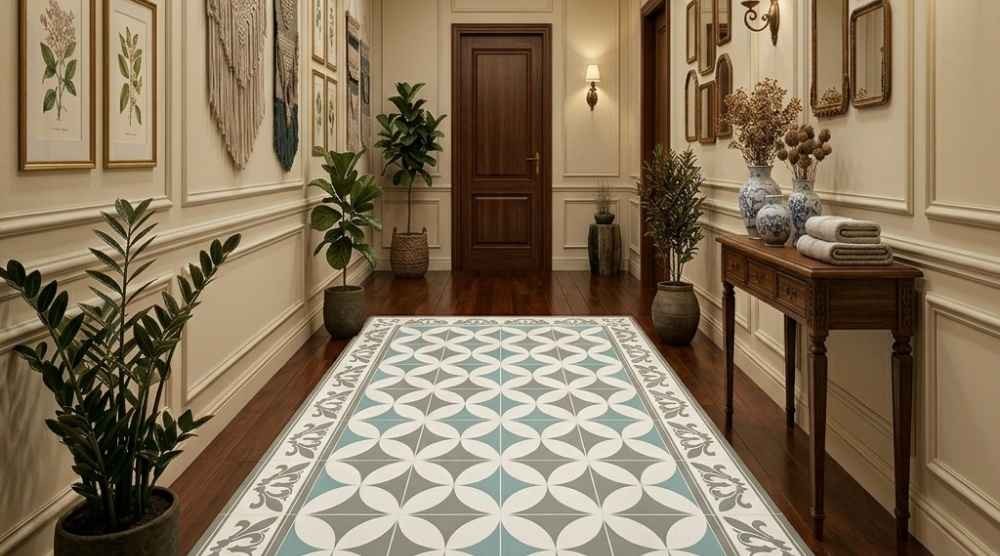
Material and texture of the runner – lightness, practicality and everyday comfort
The hallway is a heavily used place. We bring in sand, moisture, mud, dust and shoe marks here, so the runner must be not only nice but also practical. When choosing a model for a narrow and dark corridor, pay attention to the material, ease of cleaning, non-slip backing and resistance to deformation.
The best choice are runners with a compact weave or versions made of synthetic materials (e.g. vinyl rugs ) which do not retain dirt excessively. Low pile makes vacuuming easier, and a flat structure does not visually take away lightness. In a small apartment every centimeter matters, so the runner should not create the impression of a heavy layer on the floor. It should be an accessory that organizes the space rather than reduces it.
The texture can introduce coziness into the hallway, especially if the entire interior is minimalist. However, it is worth avoiding rugs that are too thick and fluffy. Although they are pleasant to the touch, in a hallway they quickly lose their freshness and may look impractical.
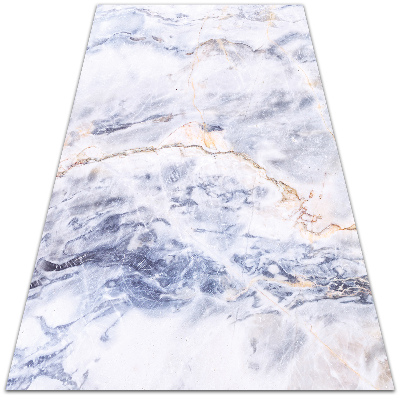
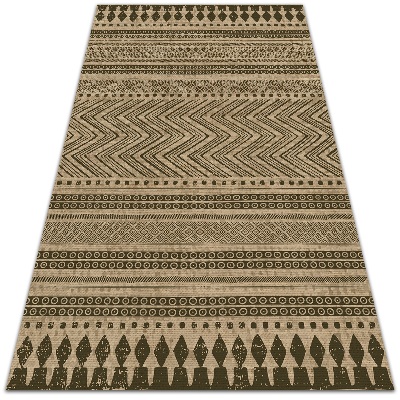
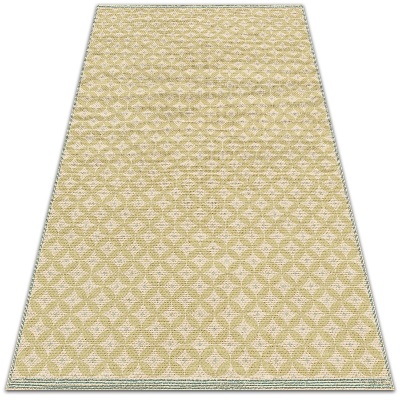
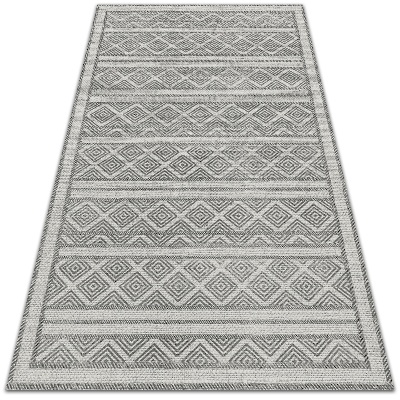
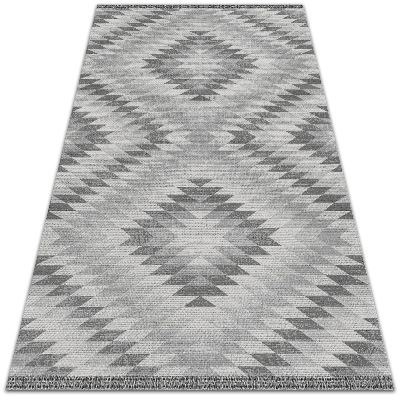
If you want an elegant effect, choose a model in a shade of warm beige, light gray or sand. Such light colors combine well with wood, white, black, gold and chrome. Combined with light furniture, a slim console, a shoe cabinet with simple fronts or custom-built cabinetry, they create a coherent arrangement. An interesting solution is also furniture on legs, because the exposed floor makes the interior appear lighter.
The runner is worth treating as part of a larger composition. If the hallway features light wood, glossy wardrobe fronts, glass elements or metal details, textiles should emphasize their character. A well-chosen runner not only protects the floors but also links all elements of the design into a cohesive whole.
The runner as part of a larger arrangement – light, mirrors and accessories
The runner alone can change a lot, but the best effect comes only in combination with other solutions. If you want to visually enlarge the hallway, you need to think of it as a whole. Light, color, the form of furniture, mirrors, accessories and storage methods all matter.
One of the most effective ways to visually enlarge a hallway is a large mirror. It reflects light, doubles the perspective and makes the interior appear deeper. In a small hallway, mirrors are almost mandatory, especially when there is no natural light. If you can, choose a high floor-length mirror or a model built into the wardrobe front.
Proper lighting is another key element. One weak lamp in the middle of the ceiling is often not enough. It is worth using ceiling lamps evenly distributed, wall lamps by the mirror or LED strips under the cabinet, by the ceiling or along the built-in furniture. The light should be soft but strong enough to brighten every part of the corridor. Well-planned lighting can significantly influence the perception of the space and make the hallway more inviting.
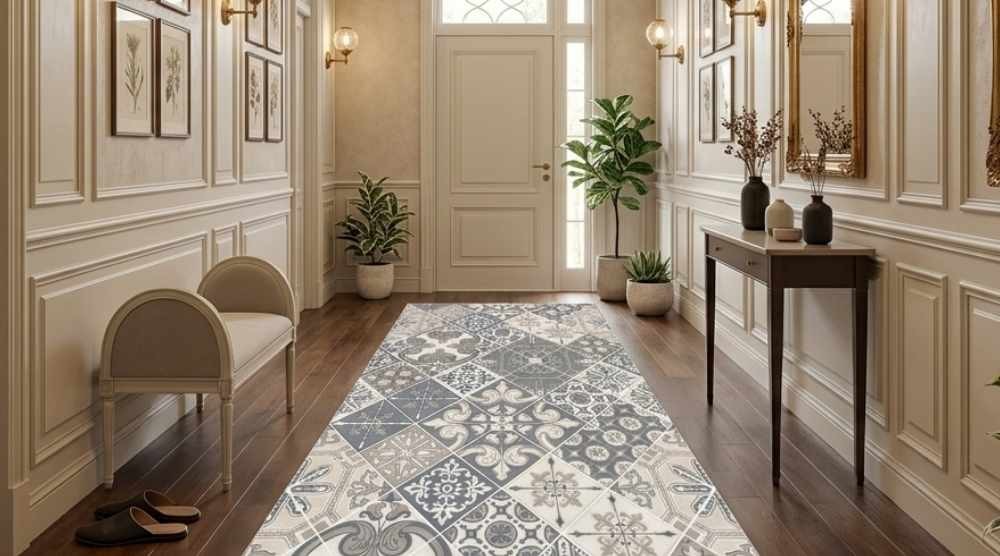
In arranging a narrow hallway, it is worth taking care of order. An excess of hangers, shoes, bags and boxes quickly overwhelms small rooms. Choose closed wardrobes, shallow chests of drawers, light furniture and multifunctional solutions. A seat with storage space, a narrow console or a shoe cabinet with a smooth front will help maintain order. The fewer random items in sight, the more organized the space appears.
It is also worth opting for architectural details. Light walls, matching skirting boards, no threshold, a uniform floor and sliding doors instead of classic wings can make the space more comfortable and more spacious. If you want to arrange a narrow hallway really well, remember that every element should work towards a common goal: visual enlargement and improving everyday comfort.
A clever hallway makeover starts with details
Visually enlarging a hallway does not require a complete renovation. Sometimes a few conscious decisions are enough for a small hallway, a narrow corridor or a dark entrance to the apartment to gain a completely new character. If you want to visually enlarge a narrow hallway or visually enlarge a small hallway, start with the basics: brighten the walls, organize storage, add a mirror and choose a runner that emphasizes the length of the room but does not overwhelm it. This is a small change that can significantly improve the perception of the entire apartment right from the threshold.